 ChatGPT
 Claude
 Perplexity
 Google AI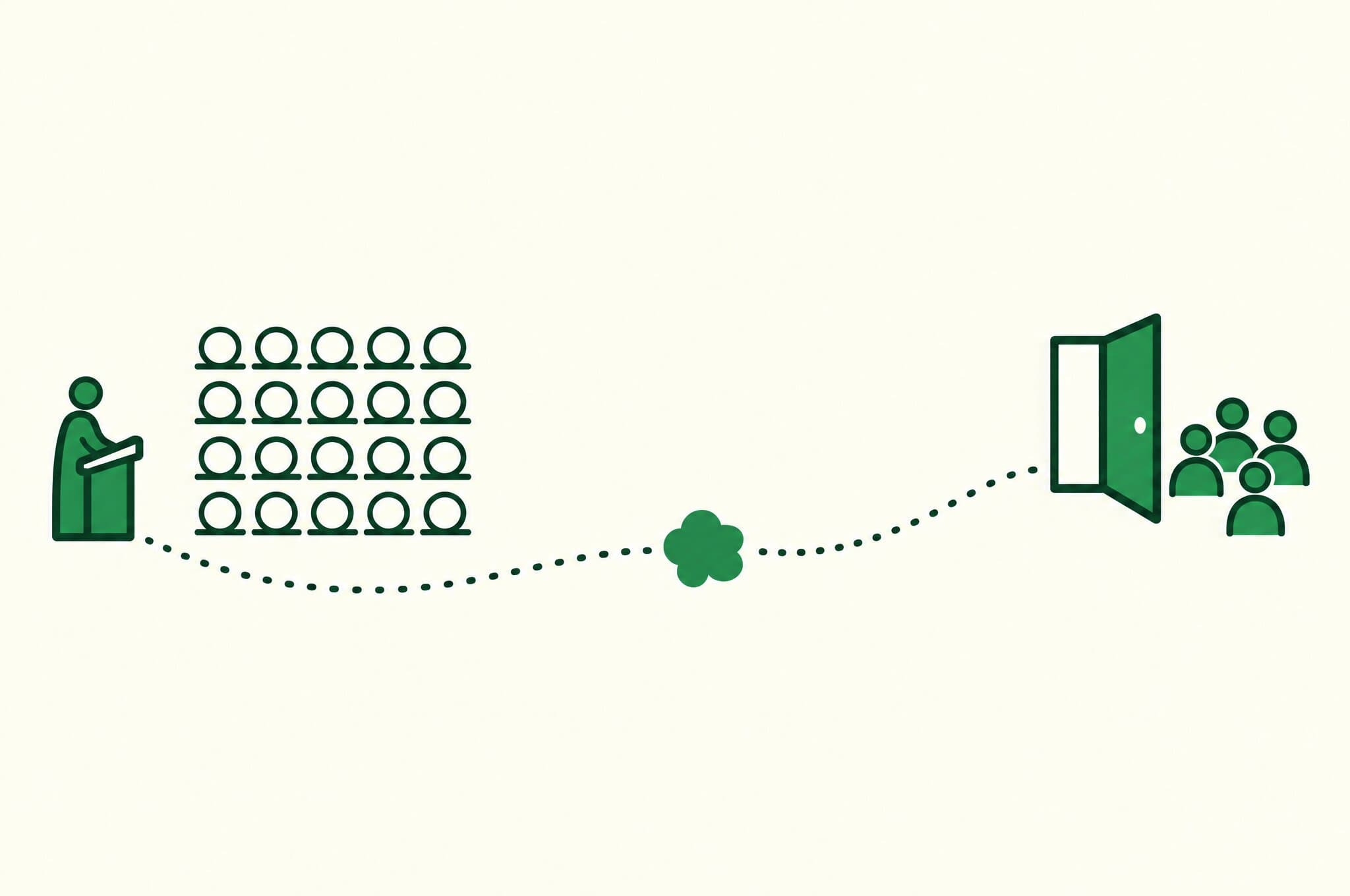
On this page
A founder I know launched her app on a Tuesday in May. She had done the launch-day liturgy: a Product Hunt post at 12:01am, a thread on X to her 43 followers, a message in two Discords. By midnight the analytics read 212 visitors and 9 signups. By Friday, daily visitors were back to single digits, and she asked me the question this post answers: "Everyone says build an audience first. I didn't. Did I just waste my launch?"
Here is the thing nobody says plainly: launching with no audience is not a failure state. It is the default state, and it is becoming more default every month. AI coding agents have collapsed the time from idea to shipped product from quarters to weeks; the number of new apps and sites going live is growing far faster than the number of people with audiences to launch them to. Almost everything now launches to nobody. The founders who grow anyway are not the ones who spent six months performing on social media first. They are the ones who understood what a launch actually is, and what to do instead of one.
Why the standard advice fails you
The standard advice — "build an audience before you build the product" — is not wrong for everyone. It is wrong as a prerequisite, for three reasons.
First, it is survivorship in a trench coat. The people dispensing it are the ones for whom it worked, which means the ones with a knack for public writing and a product whose buyers happen to live on social platforms. You do not hear from the majority who posted diligently into the void for six months and grew a following of 180 bots.
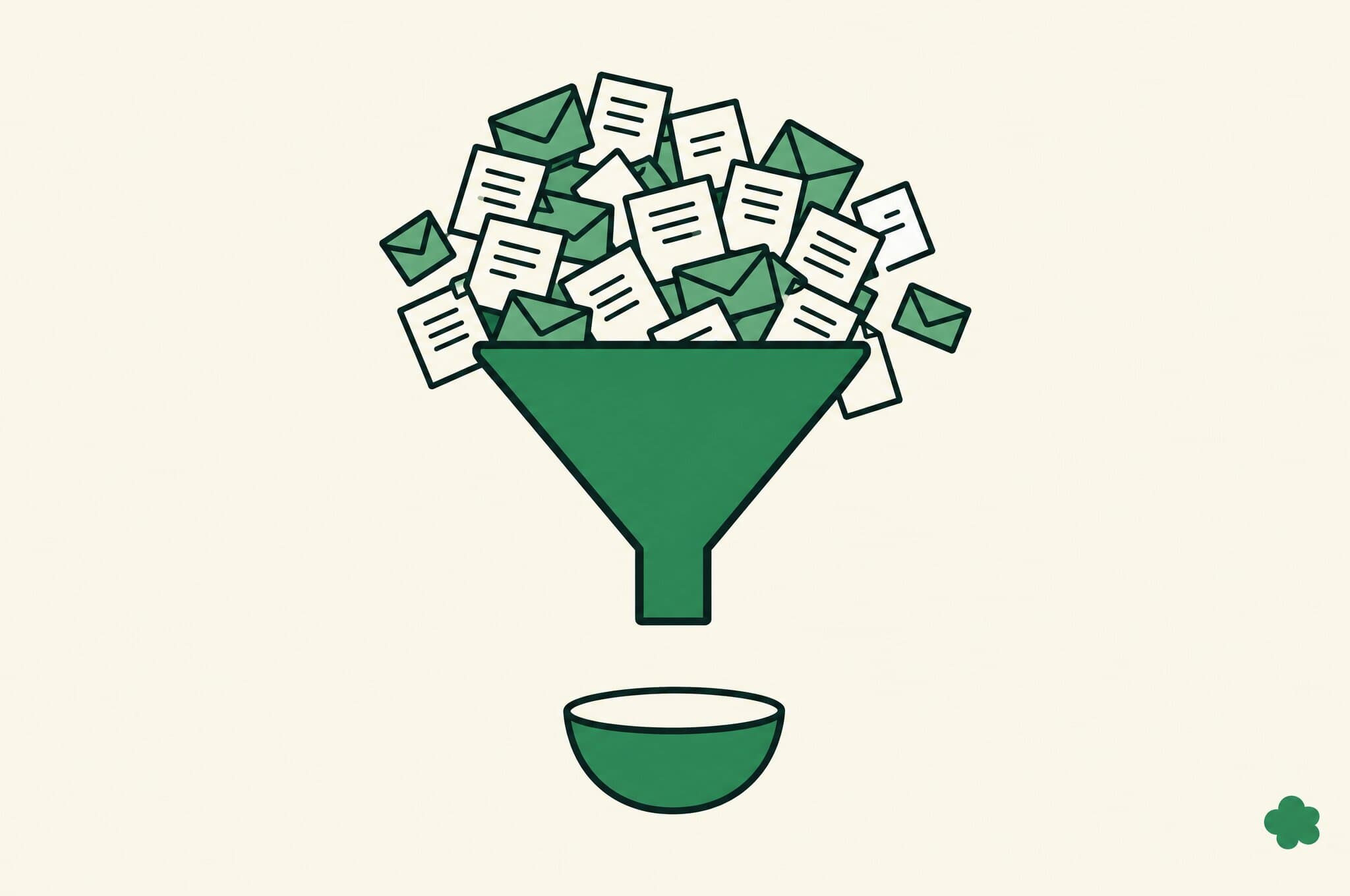
Second, an audience is a channel, not a foundation. It is one way among several that customers can find you — and like every channel, it fits some businesses and not others. A dev tool can genuinely grow from a Twitter following. A B2B compliance product cannot; its buyers are not scrolling, they are searching, and they are reachable by a well-aimed cold email. Treating audience as the universal prerequisite is choosing a channel before you have any evidence it is yours.
Third, it prices the delay wrong. Six months of audience-building before launch is six months of zero users, zero feedback, and zero revenue, spent on the channel with the slowest compounding curve. For a product that can already take a user from arrival to value, that is the most expensive possible order of operations.
What a launch actually is
Strip the mythology and a launch is an event: a one-day transfer of borrowed attention. Product Hunt, Hacker News, a launch tweet — each hands you a spike of visitors that belongs to the platform, not to you. For a product with real distribution behind it, the spike amplifies what is already moving. For a product with none, the honest arithmetic looks like my friend's Tuesday: a few hundred visitors, a handful of signups, and a decay curve measured in days.
That does not make launching worthless. It makes it small. You get a backlink, a wave of unfiltered feedback, a public page that proves you exist, and occasionally a customer who matters. Take all of that — it costs a day. Just do not confuse the event with the strategy, because the event ends Wednesday and the getting-customers problem is a loop that runs every week after.
What works from zero
Three kinds of channel work when you have no audience, because none of them requires one.
Borrowed rooms. Your users already gather somewhere — a subreddit, a Discord, a Slack community, a forum, a niche newsletter's comment section. The mechanic that works is contribution-first: be usefully present in the room for a while, then share the thing you built as a member rather than a marketer. The mechanic that fails is arriving with a link. One genuinely good post in the right room routinely beats a launch day; it is also unrepeatable on demand, which is why it cannot be the whole plan.
Search. Content that answers the questions your users are already typing compounds regardless of your follower count, which makes it the great equalizer for audience-less founders. It is also slow — months to rank, not days — which is exactly why you start it in week one rather than "after things settle." The mechanics are learnable and mostly unglamorous; SEO for startups walks through them from zero.
Direct outreach. Twenty hand-written emails to twenty exactly-right people is a channel that works from absolute zero and returns evidence fast: replies in days, and — more valuable — the words your market uses when it objects. At this volume it is research that occasionally converts, and the messages that get replies become the raw material for every other channel.
Underneath all three: the page they land on. Every channel multiplies through your landing page, and at low traffic volumes a page that converts at 4 percent instead of 1 percent is the difference between a signal and silence.
The question you are actually answering
Notice what those first weeks really are: not a growth phase, a measurement phase. You are running cheap experiments to answer the only question that matters early — which channel does my business actually respond to? Nobody knows this in advance. Not you, not an advisor, not a thread of launch tips. A meditation app and a database tool and a marketplace for used lab equipment have different answers, and the answer is discovered empirically or not at all.
This reframes the audience question properly: an audience is an output of this loop, not an input to it. Run the channels; whichever one works produces, as a byproduct, the followers, subscribers, and repeat visitors people call an audience. The founders who "built an audience first" and won are mostly founders whose channel turned out to be content — they found their channel and then compounded it, same loop, different label.
What you can hand off, and what you cannot
The loop above is simple to describe and brutal to run alongside building a product. It is a week of drafting posts, researching prospects, writing outreach, tuning a landing page, and reading results — every week. That work is execution, and execution is now delegable: an AI growth agent can run the experiments, draft the content and the outreach, watch the numbers, and carry what one channel learns into the next — the objection from a reply becoming the landing-page headline, the community post that resonated becoming the seed of the search content.
What you cannot hand off is judgment. Whether the product is ready, what your company will and will not say, which feedback to believe, whether the price is right: those calls stay yours no matter who or what does the typing. This is the line Revnu is built on: you can tell an AI agent "code me an app" and it happens; Revnu exists to make "get me customers" the other half of that sentence. It runs the loop: the channels, the drafts, the reading of results. You decide what waits for you, because the execution was always the delegable half and the judgment never was. Your first sequence always waits for your yes. After that, Settings > Agent decides what asks first. Replies to prospects, spend, budgets, booking links and new inboxes always wait.
Where this leaves you
If you are sitting on a shipped product and no audience, this week looks like this. Launch anyway — it costs a day, collect the backlink and the feedback, and expect little. Then start the actual loop: pick the two or three rooms where your users demonstrably gather and start contributing; write the first piece of search content aimed at a question your buyer types; send twenty hand-written notes to twenty exactly-right people. Give it four weeks, then follow the evidence — double down on whichever channel produced users who stuck, and drop the rest without sentiment. And if the loop itself is the thing you cannot staff, that is a job you can now hire — software or human — rather than a life you have to adopt. The audience shows up later, as a result. It was never the ticket in.
Written by

Co-founder, Revnu