 ChatGPT
 Claude
 Perplexity
 Google AI
On this page
Two founders I know asked the same question in the same month: what channel should we bet on? The first ran a compliance tool for clinics, heard "cold email works," tried it, and booked nine demos in three weeks. The second ran a consumer sleep app, heard the same advice from the same thread, tried it, and got nothing — not because she executed worse, but because no one buys a $6 app from a stranger's email, at any level of execution. Same tactic, same effort, opposite outcomes, and the difference was decided before either of them sent a word.
That is the problem with every "best marketing channels for startups" list, including the ones that rank highly for the phrase you just searched. Channel advice is autobiography. It tells you what worked for one business and presents it as physics. The truthful version of the genre has to do something different: explain what each channel is actually good for, show you the economics that decide the fit, and then admit that the final answer for YOUR startup can only be found empirically — and show you how to run that search fast.
Why every list is someone else's survivor story
Founders who succeeded on a channel genuinely believe the channel was the secret, and they are almost always wrong about the direction of causality. Outbound did not make the compliance tool grow; the compliance tool was shaped so outbound could work — an identifiable buyer with a job title, a price that pays for one-at-a-time selling, a pain sharp enough to answer a stranger about. The sleep app has none of those properties, so the same channel transmits nothing.
Strip away the anecdotes and channel fit reduces to three questions about your business. What is a customer worth? High prices can afford expensive motions like outbound and sales calls; low prices need channels where one effort reaches thousands. Who is the buyer, and are they findable? A "VP of Compliance" can be looked up by title; "people who sleep badly" cannot. How do people discover products like yours? Some problems get typed into Google, some get scrolled past on a feed, some only travel by word of mouth. Answer those three and most channels rule themselves in or out before you spend a dollar.
What each channel is actually good for
With that lens, here is the honest tour — what each major channel does well, and the business shape it requires.
SEO compounds and is slow. It works when people already search for the problem ("meal planning app", "soc 2 checklist"), and it does nothing for products nobody knows to search for. Costs consistency and months; pays rent for years. The startup version of the discipline is in SEO for startups.
Paid ads are fast and honest. A few hundred dollars returns real click and conversion data in 48 hours, which makes ads the best message-testing lab even before they are a profitable channel. As a channel, they need margin: if a customer is worth $30, there is very little room to buy one. The mechanics are in AI for paid ads.
Cold outbound (email and LinkedIn) is precise and expensive per contact. It requires a findable buyer and a price that supports one-at-a-time selling — roughly, B2B with real contract values. Done right it is the fastest route to revenue for that shape of company; pointed at consumers it is spam. The playbook is cold email that gets replies.
Social and content run on attention. They fit products that are visual, personal, or opinion-adjacent, and founders willing to publish consistently. Slow to compound, cheap to try, and unlike the other channels the audience is an asset that travels with you.
Communities and launches are where first users come from — Product Hunt, Reddit, Discords, forums. Spiky, not durable, but unmatched for the first fifty users and for learning the words your market uses. That motion is the heart of getting users for your app.
Referrals and word of mouth are the channel everyone wants and nobody can start with. They multiply existing users; they cannot create the first ones. The honest sequencing is to earn them second: once any channel above is delivering users who genuinely stick, make sharing easy and give the happy ones a reason to talk. A referral loop bolted onto a product with forty users multiplies forty.
Notice what the tour implies: the sleep app and the compliance tool should not even be reading the same list. Their "best channels" barely overlap.
Test, don't pick
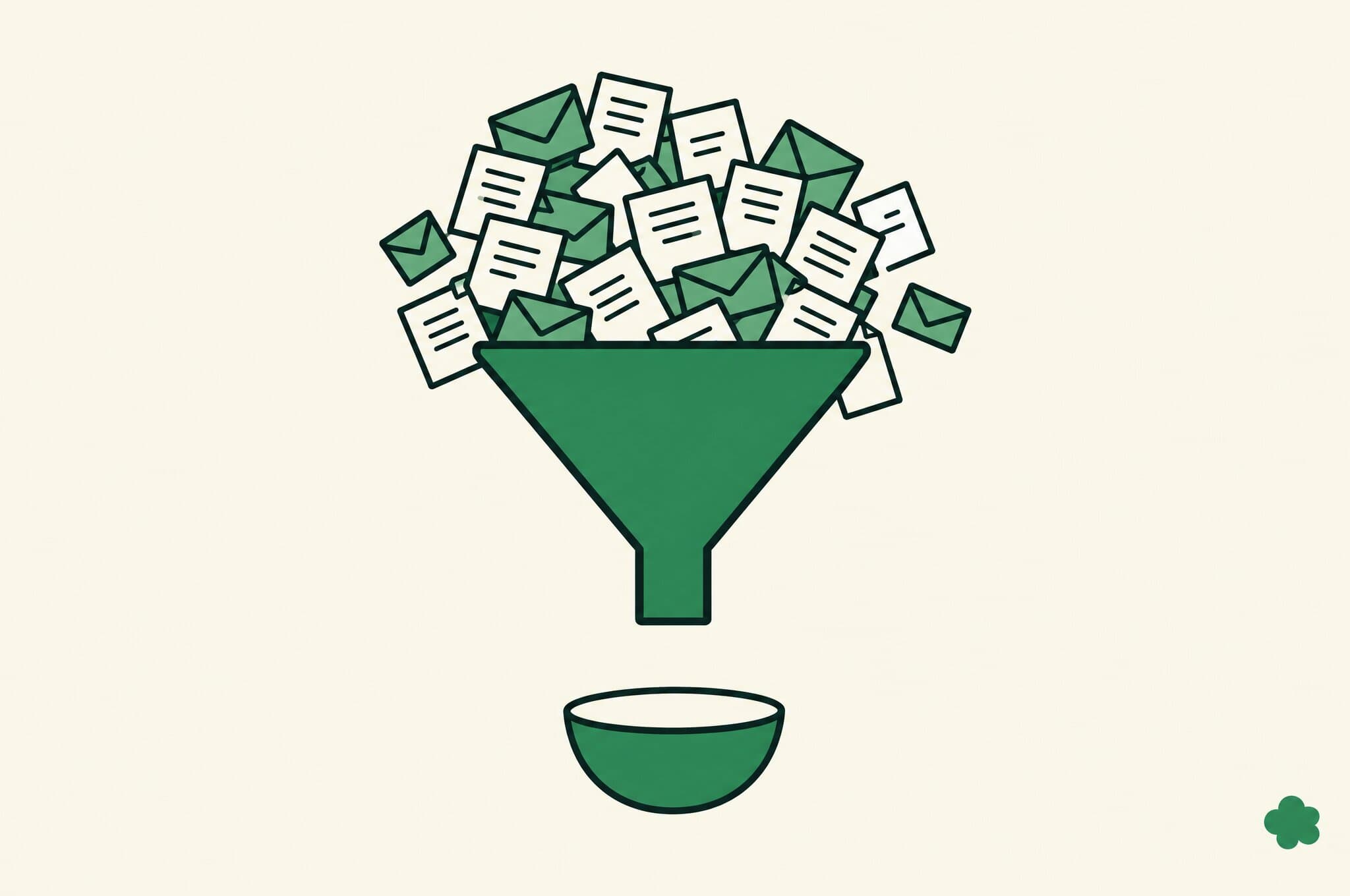
So how do you find yours? Not by deliberating harder. The founders who get this right treat channels the way scientists treat hypotheses: several small cheap experiments, run in parallel, with kill criteria decided in advance.
Concretely: pick the two to four channels whose economics plausibly fit (using the three questions above), and design the smallest honest test for each. A $300 ad run with five different messages. Twenty genuinely researched outbound emails. Two weeks of real participation in the community where your users complain. Decide before you start what counts as signal — a click-through rate, a reply, a signup — and what silence means. Then run them simultaneously, because sequential testing burns months and because the comparison is the data.
Two disciplines make or break this. First, when a test fails, suspect the message before the channel; a guess repeated in four channels produces four false negatives. Second, respect each channel's natural clock — ads speak in days, outbound in weeks, SEO in months — so you neither quit a slow channel early nor let a dead one linger on hope.
A concrete version, for a founder with $500 and four weeks. Week one: write down the three economics answers, pick three surviving channels, and define the signal number for each. Weeks two and three: run all three at once — the ad set with five messages, the twenty researched emails plus follow-ups, daily presence in the two communities that matter. Week four: read the numbers against the thresholds you wrote down, not against your hopes. Most tests will be ambiguous rather than cleanly dead, and the tiebreaker is quality: which channel produced users who came back, replied twice, or asked a real question. That is the channel that earns month two.
Then do the thing that feels unnatural: kill the losers without sentiment and pour effort into the winner. Most startups end up with one primary channel and one supporting it. The goal of testing was never a diversified portfolio; it was finding the concentrated bet fast.
The experiments feed each other
Here is the part the channel-by-channel framing hides: the tests are not independent, and treating them as independent wastes most of what they teach. When one of five ad messages wins, you have not just learned about ads — you have learned which pain, phrased which way, makes your buyer act. That phrase belongs in your cold email subject line, your landing page header, and the next month of content. When outbound replies keep raising the same objection, that objection is your next SEO article. Even a channel that fails is a finding: "outbound converts nothing" is a fact about how your market buys, and it redirects budget somewhere better.
What resonates is a fact about demand, not about a channel. This is why running the experiments in one place, with one memory, beats a stack of disconnected point tools each optimizing its own lane: the lesson each test produces is worth more than the test's own result, but only if something carries it across. In a tool stack, nothing does — you are the only integration layer, at 11pm, between dashboards.
Where Revnu fits
Everything in this post is a job description: run cheap experiments across every channel, read the results honestly, kill losers, compound winners, and carry every lesson to every lane. That used to be what you hired an agency or a growth lead to do, and it is exactly what Revnu is: an AI growth employee that plugs into any business, B2B or B2C, whatever your channel turns out to be, and runs the try-measure-redirect loop for you, with one shared memory underneath. It is honest about the same limits this post is: it cannot know your channel in advance either; nothing can. The difference is it finds out the systematic way. Your first sequence always waits for your yes. After that, Settings > Agent decides what asks first. Replies to prospects, spend, budgets, booking links and new inboxes always wait.
Where this leaves you
Stop asking which channel is best and start asking which channels your business can afford, whether your buyer is findable, and how your users discover things (the version of that question for AI answers is in does showing up in AI answers actually bring you customers) — those three answers eliminate half the menu before you spend anything. Take the two to four survivors, design the smallest honest test for each, define signal in advance, and run them in parallel this month. Suspect the message before the channel, respect each channel's clock, and when the evidence picks a winner, concentrate on it without nostalgia for the others. The founders who grow are not the ones who guessed right at the start. They are the ones whose testing loop was cheap enough, and honest enough, to make guessing unnecessary.
Written by

Co-founder, Revnu