AI growth agent
AI Growth Agents: What They Do and How They Get You Customers
On this page
A founder I know spent six months running growth alone. He wrote the blog posts at night, ran a few LinkedIn ad tests on weekends, sent cold emails in batches of fifty, then forgot to follow up. Most of it never compounded because nobody was watching what worked. This is the gap an AI growth agent is built to close. Not a chatbot that answers questions, not a writing tool that spits out copy, but software that runs growth work across channels and learns from the results.
The category is new and the term gets stretched. Every tool with an LLM bolted on now calls itself an agent. So before you evaluate one, you need a sharp definition and a working test. This post gives you both, with Revnu as the concrete example, because Revnu is an AI growth agent and I would rather show you the mechanics than sell you the dream.
What an AI growth agent actually is
An AI growth agent is an autonomous agent that runs growth execution across channels and improves through a shared learning loop. The two parts both matter. "Across channels" means it does not just write blog posts. It runs SEO content, ad experiments, cold outbound, partnership pitches, reporter intros, and A/B tests on your pricing and copy, all from one place — which matters because nobody can predict which channel fits a given business; it has to be found by testing. "Shared learning loop" means a subject line that lands in cold email informs the ad headline it tries next week.
Compare that to the usual setup, where your SEO tool, your email tool, and your ad manager each live in their own tab and never talk. The agent collapses those into one operator that holds context across all of them.
Revnu works this way. You connect Stripe, GitHub, your site, and Slack or iMessage. It reads your product, your audience, and your voice from those sources, then starts proposing growth work. The connection step is the anchor: an agent that has not read your actual product and pricing is guessing, and guessing is what makes most "AI marketing" output generic.
Why it is not an AI writing tool
A writing tool waits for you. You open it, type a prompt, get a draft, and paste it somewhere. The loop starts and ends with your hand on the keyboard. That is useful, and it is not a growth agent.
An AI growth agent starts the loop itself. It decides that your changelog page is thin, drafts three blog posts to target keywords your buyers search, queues them for review, and tracks whether they rank. The writing is one step inside a longer chain that includes deciding what to write, why, and what to do with the result.
Here is the concrete difference. A writing tool will happily produce ten landing-page variants if you ask for ten. An AI growth agent decides whether a landing-page test is worth running at all, picks the two variants most likely to move signups, ships the test, reads the result, and feeds that result into the next decision. The output looks similar. The work around the output is the whole point. If you want a fuller picture of where generation fits, how to use AI for marketing covers the spectrum from single-shot tools to agents.
Why it is not marketing automation
Marketing automation runs the rules you write. You build a flow: when someone signs up, wait two days, send email A; if they open it, send email B. It executes that flow forever, exactly as specified, until you go in and change it. It never asks whether email A was the right email.
An AI growth agent writes and revises the rules. It drafts the win-back campaign, decides the timing, watches the reply rate, and rewrites the angle when the first version underperforms. Automation is a recipe you wrote once. The agent is closer to an operator who reads the recipe, cooks it, tastes the result, and changes the seasoning.
| AI writing tool | Marketing automation | AI growth agent | |
|---|---|---|---|
| Who starts the work | You | A trigger you set | The agent |
| Scope | One draft at a time | One channel, fixed flows | Many channels, one loop |
| Adapts to results | No | No | Yes |
| What it needs from you | A prompt | A flowchart | A connection and approval |
The row that separates them is "adapts to results." A writing tool and an automation flow both do exactly what you told them. The agent changes its own behavior based on what is working, which is why it gets more useful the longer it runs.
How it actually gets you customers
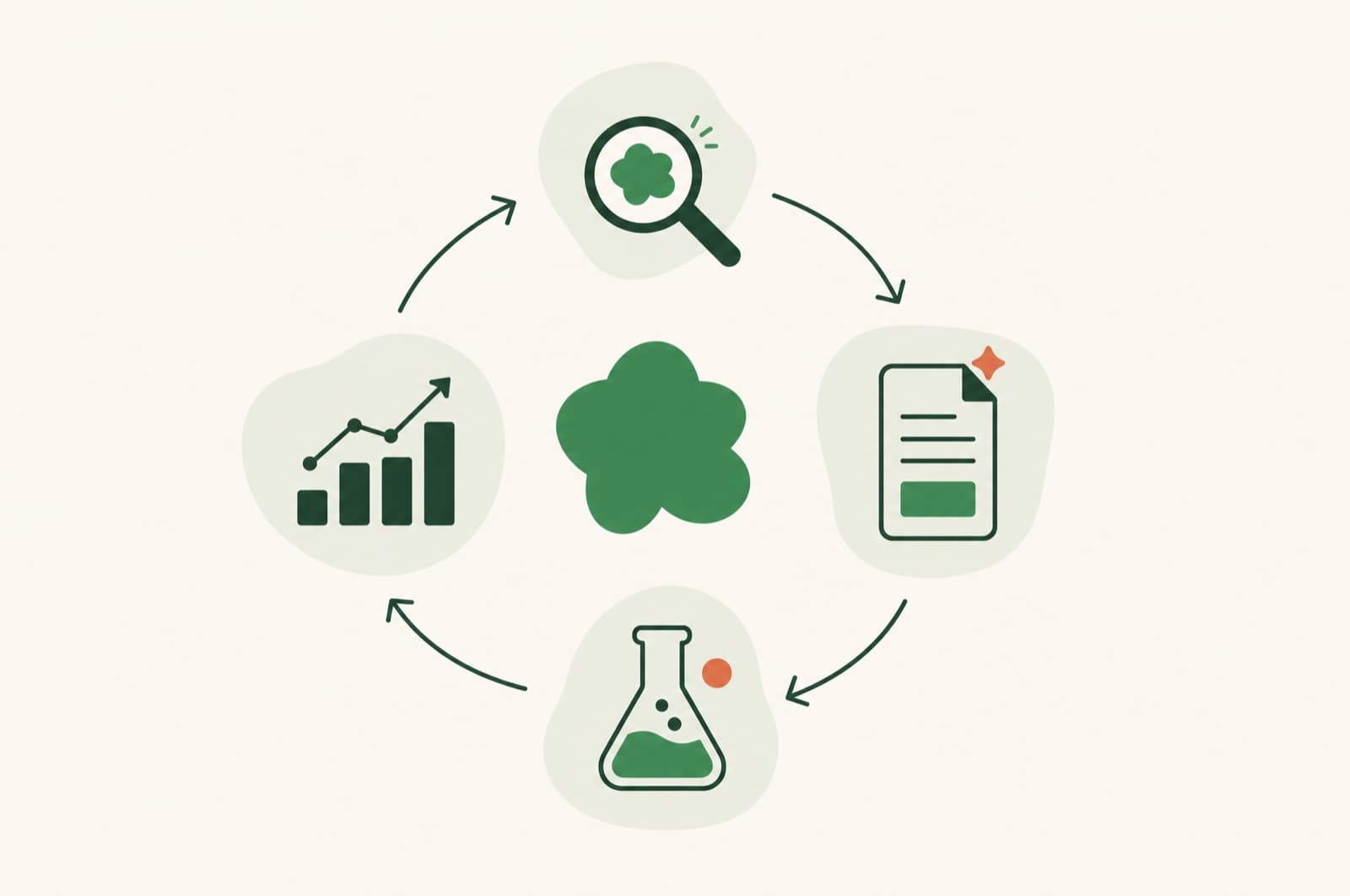
The mechanism is four repeating steps, and naming them makes the whole thing concrete.
Research first. The agent reads your product, your existing customers, and your market, then forms a view on who to target and where. This is where the Stripe and GitHub connections earn their place. The agent knows what you charge and what you ship, so the keywords and outbound angles it picks are grounded in your actual product, not a generic SaaS template.
Drafting second. It produces the work: a blog post, a batch of cold emails, two pricing-page variants, a partnership pitch to a complementary company. Each draft is specific to your voice because it learned your voice from your site and your messages.
Experiments third. It does not ship one thing and hope. It runs the post and the ad test and the outbound batch, then measures which got opens, clicks, replies, signups.
The learning loop fourth. Results from every channel feed back into the next round of decisions. A phrase that converts in cold email becomes an ad headline. A keyword that ranks becomes the seed for three more posts. This is the part a human running five tools cannot do well, because the signal is scattered across five dashboards and nobody has time to connect it. If you are still pre-revenue, the same loop applies to getting your first customers, where the experiments are smaller and the learning matters more.
What it is good at, and what it is not
Be honest about the boundary or you will be disappointed. An AI growth agent is good at repetitive cross-channel execution and at running many small experiments in parallel. Writing twenty cold emails tuned to twenty segments, shipping a pricing test, drafting a week of social posts, following up on outreach that went quiet: this is exactly the work that decays when a busy founder owns it, and exactly the work an agent does without getting tired or distracted.
It is not good, yet, at the things that need taste and authority. It will not decide your positioning for you, will not tell you which feature to build next, and will not replace the judgment call about whether a partnership is on-brand. It does not guarantee customers, and any tool that promises that is lying to you. What it does is compound. The first week is decent. The tenth week is better, because by then the learning loop has ten weeks of results to draw on.
Revnu is explicit about this split. Strategy, brand, and product direction stay with you. The agent takes the execution that you would otherwise drop on the floor.
How a human stays in control
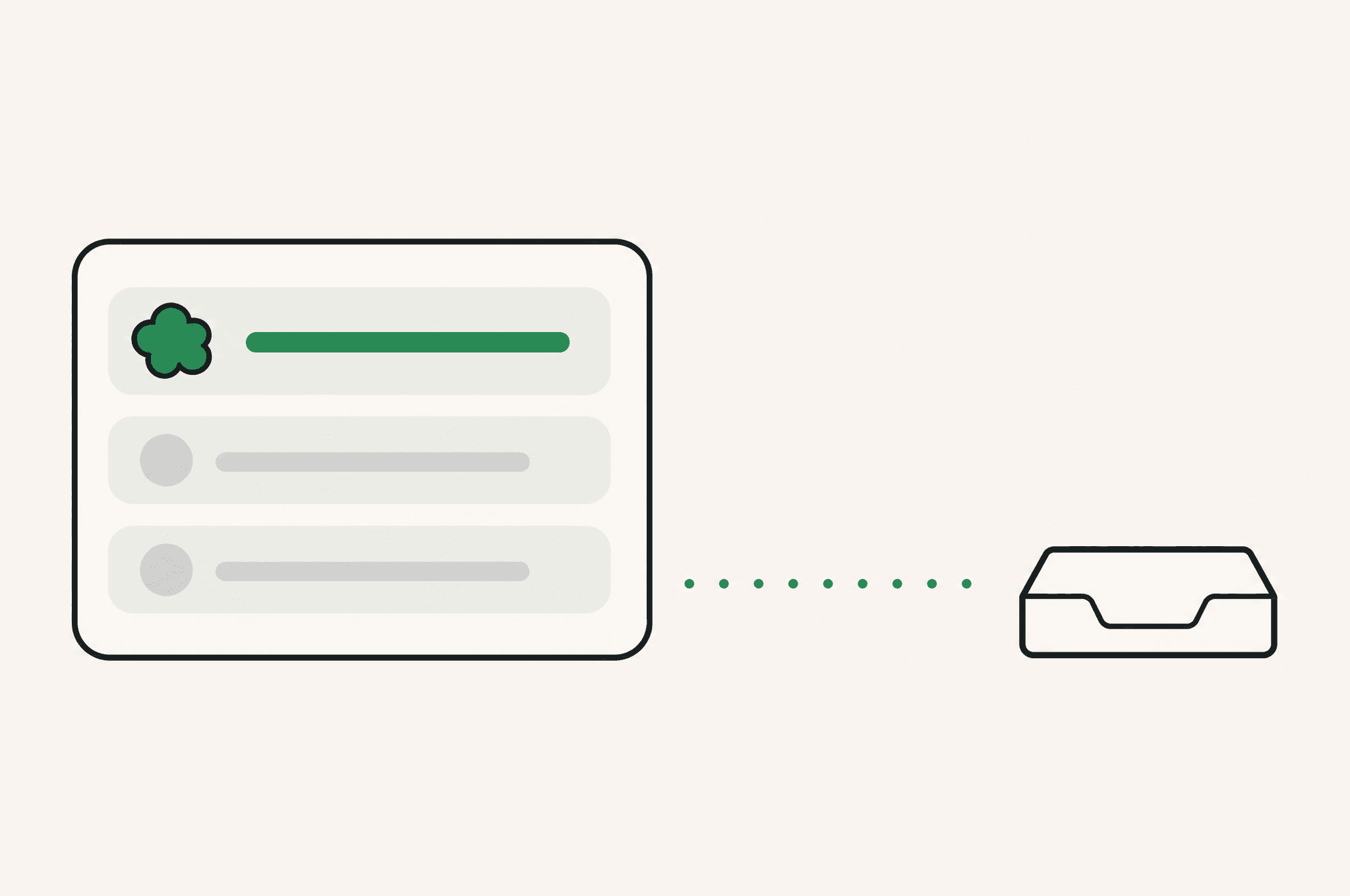
The fear with any autonomous agent is that it does something dumb in your name at 2am. The control mechanism that answers this is a review queue.
Every draft the agent produces, every email, every blog post, every ad, lands in a queue before it goes anywhere. You approve it in one tap from Slack or iMessage, the same place you already work. Nothing ships without your yes, unless you decide otherwise. For lanes you trust, you can turn on auto-send, so low-stakes work like social posts flows without a tap while high-stakes outbound still waits for you.
This is the design that makes an autonomous agent usable. You get the throughput of software that never sleeps and the safety of a human signing off on what represents your company. Revnu also does not train on your data, which matters when the agent is reading your customer list and your pricing. You can see the full set of lanes and controls on the features page, and if you are weighing the purchase itself, is Revnu worth it covers what you get, what it costs, and why it works.
How to evaluate an AI growth agent
Run this test on any tool that calls itself an AI growth agent. First, does it read your real product, or does it start from a blank prompt? An agent that has not connected to your Stripe, your repo, or your site is a writing tool wearing a costume.
Second, does it work across channels with shared learning, or is it one channel pretending? A tool that only does SEO, or only does email, is a point tool. The value of an agent is the loop between channels, so ask specifically whether a result in one channel changes behavior in another.
Third, who is in control? A credible agent gives you a review queue and approval, not a black box that sends on its own with no log. If you cannot see and approve what it does, you do not have an agent, you have a liability.
Fourth, what does it cost relative to the alternative? Compare it to a part-time marketer or an agency retainer, not to a free writing tool. The honest comparison is against the human you would hire to do this work. Revnu's pricing is built around that comparison.
Where this leaves you
An AI growth agent is not a chatbot and not a fancier writing tool. It is software that researches, drafts, experiments, and learns across your growth channels, with you approving the work that goes out. It handles the cross-channel execution that founders drop when they get busy, and it compounds because it remembers what worked. It will not set your strategy or build your product, and it will not promise you customers, because nothing honest can.
If you want to see one running on your actual product, connect Revnu to your Stripe, your repo, and your site, watch what it proposes in the review queue, and approve the first thing that looks right. The learning loop starts on day one.
Let Revnu run this for you.
Connect your product and Revnu drafts the SEO, ads, and outbound. You approve in one tap. Book a 30-minute call and see it on your stack.
Book a demoFrequently asked questions
Is an AI growth agent just ChatGPT with extra steps?
No. ChatGPT waits for your prompt and produces one output. An AI growth agent starts its own work, runs it across channels like SEO, ads, and outbound, measures the results, and changes what it does next based on what worked. The generation is one step inside a longer loop of research, experimentation, and learning that a chat tool does not run.
Will an AI growth agent replace my marketing hire?
It replaces the repetitive execution a marketer spends most of their time on: drafting, sending, testing, following up across channels. It does not replace strategy, brand judgment, or deciding what to build. Most early founders do not have a marketer at all, so the honest comparison is between an agent doing the execution and that work not getting done.
How does an AI growth agent actually get me customers?
Through four repeating steps. It researches your product and market, drafts work like blog posts and cold emails, runs experiments across channels, and feeds results back through a learning loop so the next round is sharper. Customers come from the compounding, not from any single send. It improves as it accumulates results, which is why it gets more effective over time.
Do I lose control of what gets sent in my name?
No. Every draft lands in a review queue first, and you approve it in one tap from Slack or iMessage. Nothing ships without your yes unless you explicitly turn on auto-send for a lane you trust. You keep a human sign-off on anything that represents your company, with the throughput of software that runs around the clock.
Does Revnu train on my data?
No. Revnu reads your connected product, audience, and voice to do the work, but it does not train on your data. That distinction matters because the agent reads sensitive material like your customer list and pricing. You connect Stripe, GitHub, your site, and Slack or iMessage, and that context drives the drafts without becoming training input.
Written by
Art Freebrey
Co-founder, Revnu