
The Unbounce alternative that fills the funnel.
Unbounce builds and tests pages for traffic you already have. Revnu brings the traffic: outbound, ads and search, run for you.
- No thousands of visitors needed to start.
- Pages written with the campaigns that feed them.
- Every channel run for you, every budget approved by you.
You choose what waits for your approval.




Revnu running your ads
“only growth tool i've found that actually gets me customers”
Trusted by teams at











Revnu works. You build.
Paid ads launch, outbound sends and search pages publish. Revnu watches the results and changes what happens next.
Which should you choose?
Unbounce, if
- You spend real money on paid acquisition.
- Engineering is the bottleneck for pages.
- You have the traffic to test variants.
Revnu, if
- The funnel is empty.
- No channel is working yet.
- You want the visitors, not the page builder.
Unbounce vs Revnu
What it is
Unbounce: A landing page builder and tester
Revnu: An AI growth employee
Acts on
Unbounce: Traffic that already arrived
Revnu: Whether traffic arrives
Requires to work wellKey difference
Unbounce: Thousands of visitors per variant
Revnu: Nothing upstream
Who writes the page
Unbounce: Your marketer
Revnu: The agent drafts, you approve
Who brings the visitorsKey difference
Unbounce: You, from some other channel
Revnu: The agent, across every channel
Scope
Unbounce: The page at the end of a funnel
Revnu: SEO, AI search, outbound, LinkedIn, ads, and the loop between them
Best customer
Unbounce: A team spending real money on ads
Revnu: A founder with no channel working yet
The full comparison
Unbounce vs Revnu: A Landing Page or the Traffic to Test It
By Art Freebrey · September 1, 2026 · 10 min read
 ChatGPT
 Claude
 Perplexity
 Google AI
Here is a calculation worth doing before you buy anything in this category. Suppose your landing page converts at 3 percent and you want to know whether a new version gets you to 4 percent, which would be an excellent result. To distinguish those two rates from random variation with any confidence, you need on the order of several thousand visitors per variant. Now suppose you get four hundred visitors a month. The test takes over a year, by which point your product, your positioning, and probably your market have changed underneath it.
Most founders who buy a landing page tool never run that calculation, and so they end up running tests that cannot conclude, reading noise as signal, and shipping the variant that happened to be ahead. That is the frame for comparing Unbounce and Revnu. The argument is not that landing pages do not matter. It is that the tool's core value, testing your way to a better page, has a volume prerequisite that is arithmetic rather than opinion.
What Unbounce actually is
Two things bundled. First, a builder: drag-and-drop landing pages published on your domain, with forms, popups, and templates, so a marketer can ship a campaign page on a Tuesday without an engineering ticket. Second, an optimization layer: split traffic between variants, measure conversion, and in the automated mode route each visitor toward whichever variant is predicted to convert them.
The builder half is straightforwardly useful and always has been. Campaign pages have a different job from your website, they need to appear and disappear on campaign timelines, and coupling them to your main codebase makes both worse. Decoupling them is correct, and it is the reason this category outlived every prediction that website builders would absorb it.
The optimization half is where the value concentrates for their actual customer, and where the volume prerequisite lives. Automated routing is a genuinely smart response to the small-sample problem, because it starts steering traffic before a classical test would conclude. It reduces the volume you need. It does not remove it.
When Unbounce earns its cost
The concession, made plainly: if you are spending money on ads, you should be sending that traffic to purpose-built pages, and this is the cheapest way to do that.
The profile is a company running continuous paid acquisition with real budget, several campaigns or audiences in flight, and a marketer who owns cost per acquisition. For them the arithmetic is easy and the tool is close to mandatory: a lift in landing page conversion cuts acquisition cost proportionally across all spend, forever, and at meaningful budgets that is worth far more than any subscription. They also have the traffic to test honestly, because paid traffic is a tap you can open.
There is a second good fit that gets less attention: teams whose engineering queue is the real bottleneck. If shipping a page takes three weeks of somebody else's sprint, a builder is buying speed rather than conversion, and speed is often the more valuable purchase.
The honest limit
The limit is that a landing page is the last few metres of a channel, and it inherits everything from what came before it. Who arrived, how qualified they were, what they were promised, and what they expected to find are all set upstream. The page can lose a visitor who was ready, and it cannot create one who never came.
This produces a specific and common failure. A founder with a quiet product looks for something to improve, finds the page, and improves it, because it is the part of the funnel entirely under their control. Weeks go in. Conversion moves from an unmeasurable number to a slightly different unmeasurable number. Nothing happens, because the input was four hundred visitors and doubling a rate on four hundred visitors changes an absolute number that was never the problem. The same effort spent finding a channel that brings four thousand would have changed the business.
There is a third thing worth naming because it is rarely said out loud: at low volume the tests you run do not merely fail to help, they mislead. A variant that shows a 40 percent lift on ninety visitors is overwhelmingly likely to be noise, and shipping it teaches you a false lesson about your buyer that you will carry into your next page and your next ad. Bad data is worse than no data because it is confidently wrong.
The reframe: the destination or the road to it
Every conversion tool operates on a denominator somebody else has to produce. That is not a criticism, it is a division of labour, and the tools are honest about it. The mistake is on the buying side, where a conversion tool gets purchased to solve a demand problem because conversion is the visible, controllable, satisfying end of the funnel.
Revnu works on the denominator. It runs experiments across channels to find which one brings your buyer, ships the work in whichever responds, reads the result, and redirects effort accordingly, including when the honest answer is that a channel is not working and the budget should move. It also drafts and ships the page at the end of the lane, because the page is part of the work rather than a separate discipline, and because the same brain running the ad and the page means the promise in the ad and the promise on the page finally match. Spend always waits for your approval. On Pro, new blog posts publish on their own after a hold (the next weekday at 9am, at least 24 hours away), and new sequences after your first go live without asking. One-off emails, LinkedIn invites and messages, and ad tests ask first. Change any of them in Settings > Agent.
If you just shipped an app
Do the calculation at the top of this page with your own numbers before you buy anything. Take your monthly visitors, halve it for two variants, and ask whether that figure could distinguish a one-point difference in conversion. If it cannot, you are not in the market for a testing tool yet, whatever the pricing page says.
Build one simple page on the site you already have, put your clearest promise on it, and spend the freed-up time on getting anyone qualified to see it. When one channel starts reliably delivering thousands of visitors a month, the conversion question becomes real, measurable, and worth proper money. Until then it is a rounding error dressed as a project.
What to do instead at low volume
You are not helpless without statistical significance, you just have to change the method.
Stop trying to detect small differences and start looking for large ones. At low traffic the only changes worth making are the ones big enough that you would not need a test to believe them: a headline that states a different promise entirely, a page aimed at a different buyer, an offer that removes the thing people were balking at. If a change could plausibly double your conversion, you will see it at modest volume. If it could plausibly move it by ten percent, you will never see it, and you should not spend the week.
Then replace measurement with observation, which does not need a sample size. Watch five people use the page and talk while they do it. Read what the ones who did not convert wrote back when you emailed them. Ask the three customers you already have what nearly stopped them. Five sessions will tell you more about a page with four hundred visitors than any split test could, because you are gathering reasons rather than counting outcomes.
Save the testing discipline for when volume makes it honest. Testing is a wonderful tool with a hard prerequisite, and using it below that prerequisite does not produce a weaker version of the benefit, it produces confident wrong answers.
Where this leaves you
Choose Unbounce if you are running paid acquisition at scale, or if your engineering queue is what stands between you and shipping campaign pages. Both are legitimate and the tool is good at both.
Choose Revnu if the funnel is empty. Your constraint is that no channel is yet delivering qualified people, and conversion work on an empty funnel is a way of feeling busy while the actual problem goes untouched.
And if you are about to A/B test a page that gets a few hundred visits a month, do not. See what the employee actually runs on the features page, and if you are weighing the purchase itself, is Revnu worth it covers what you get and what it costs.
Keep reading
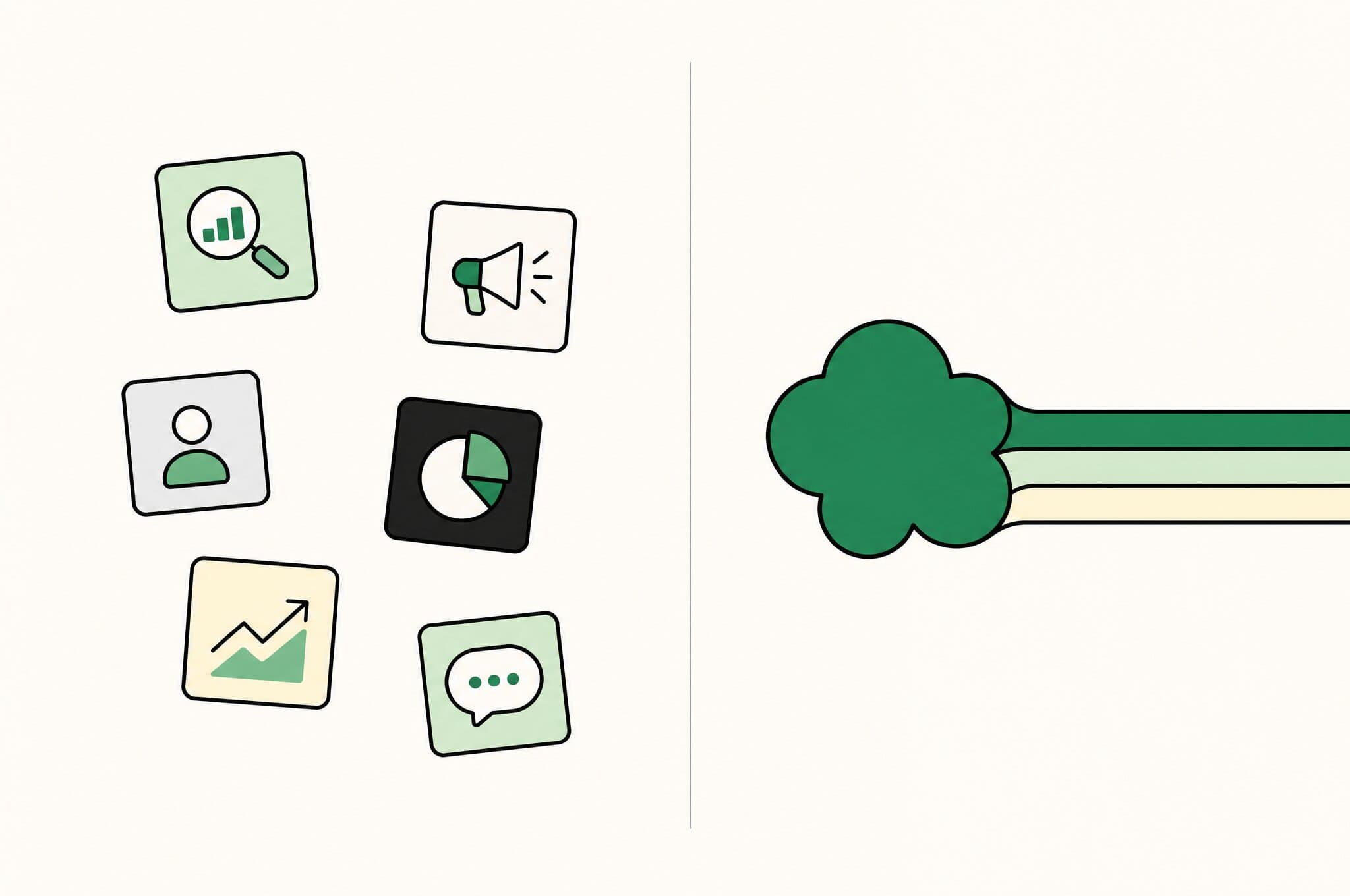
Build your own AI growth agent
AI Growth Agent vs Building Your Own: Build or Buy?
A coding agent can write cold emails in a weekend. Sending domains, verified lead data, pacing, approvals and measurement take longer. Here is what you would build, what Revnu's API hands you, and when building your own is the right call.
October 15, 2026 · 7 min read
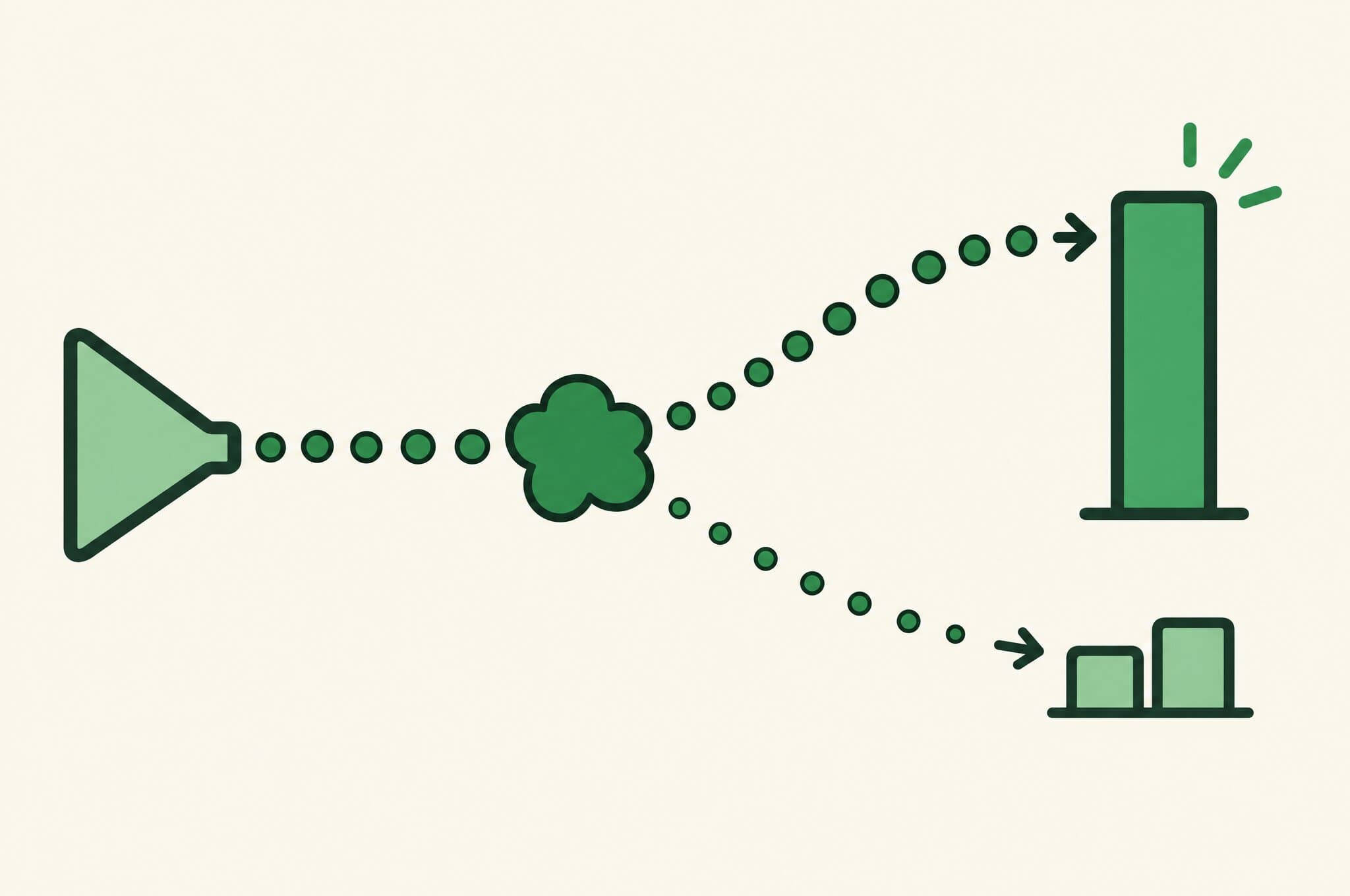
Ryze AI alternative
Ryze vs Revnu: An AI Ads Manager or a Growth Hire for Every Channel?
Ryze and Revnu both run your ads with an AI and ask before they change things. Ryze leads with ads, Meta included, plus SEO and agency white label. Revnu adds cold email and LinkedIn outreach and judges ads on booked calls. Here is the straight comparison.
October 15, 2026 · 5 min read
Questions
What does Unbounce actually do?
It lets marketers build standalone landing pages without engineering, then test them. You get a drag-and-drop builder, templates, forms and popups, publishing under your own domain, and A/B testing with traffic split between variants. It also offers automated traffic routing that sends each visitor to whichever variant it predicts will convert them best. The purpose is to decouple campaign pages from your main site and your engineering queue.
How much traffic do you need for a valid A/B test?
More than most people expect. Detecting a realistic improvement, say from a 3 percent conversion rate to 4 percent, generally needs thousands of visitors per variant to reach confidence, and the smaller the improvement the more you need. At a few hundred visitors a month, the difference you observe between two variants is dominated by noise, and acting on it is as likely to hurt as help. This is arithmetic, not pessimism.
Is a landing page builder worth it for an early-stage startup?
It depends entirely on whether you are running paid campaigns. If you are spending on ads, dedicated landing pages genuinely outperform sending traffic to a homepage, and a builder that removes the engineering dependency pays for itself quickly. If you are not running paid traffic, you are buying a page for visitors you do not yet have, and a simple page on your existing site does the same job for free until volume arrives.
What if conversion is low and traffic is low?
Fix traffic first, because low traffic makes conversion unmeasurable. With a hundred visitors a month you cannot tell a 2 percent page from a 4 percent page, so you cannot improve it except by guessing. Once volume is real, conversion work becomes measurable and worth doing properly. The uncomfortable version of this is that a doubled conversion rate on a trickle is still a trickle, while a channel that works changes the absolute number.
Does Revnu build landing pages or run A/B tests?
Revnu improves your pages through GitHub: if your site lives in a GitHub repo you connect, it opens pull requests with page copy and conversion fixes, which you review and merge.

── 1-minute setup
You build.
We grow.
Connect your tools. Wake up to ads scaled, posts ranking, leads queued, churn won back. Pings you a message when something actually moves.