
One growth agent or five point tools?
Most founders run growth on disconnected tools and call it a stack. Here's the real cost, and when one agent wins.
- One flat fee instead of several subscriptions.
- Nothing to wire together by hand.
- Channels that learn from each other.
You approve every send.

What worked, every morning
“only growth tool i've found that actually gets me customers”
Trusted by teams at









Revnu works. You build.
Paid ads launch, outbound sends and search pages publish. Revnu watches the results and changes what happens next.





Which should you choose?
The stack, if
- One channel is your whole business.
- You need a specialist tool's deepest features.
- Someone runs each lane full-time.
One agent, if
- You run growth yourself across channels.
- You're tired of being the integration layer.
- You want the lanes to teach each other.
One AI growth agent vs Stack of point tools
Software fees
Stack of point tools: Several apps, plus a data tool and enrichment credits
One AI growth agent: One flat fee
Setup
Stack of point tools: Each tool onboarded and wired separately
One AI growth agent: Connect your channels once
Glue workKey difference
Stack of point tools: You move context between tabs by hand
One AI growth agent: The system shares context internally
Context switching
Stack of point tools: Constant, the real time sink
One AI growth agent: One review surface
Cross-channel learningKey difference
Stack of point tools: None, unless you do it manually
One AI growth agent: Built into the loop
What it asks of you
Stack of point tools: To be the integration layer
One AI growth agent: To approve drafts
The full comparison
One AI Growth Agent vs. a Stack of Point Tools
By Art Freebrey · June 30, 2026 · 10 min read
Count the tabs. A founder I talked to last month ran growth on seven: an SEO tool for keywords, a separate writer for drafts, a data tool to find contacts, an outbound tool to send the emails, the Meta and Google ad managers, and a spreadsheet to remember what he had tried. Each one was good at its job. None of them knew the others existed. He was not running a growth stack; he was the growth stack, the one piece of software holding context between six apps that would never speak to each other. That role, unpaid integration layer, is the real subject of this comparison.
An AI growth agent and a stack of point tools are two answers to the same question: how does a small company run SEO, ads, and outbound at once? The point-tool answer is to buy the best app for each lane and wire yourself in between them. The agent answer is to run all three lanes inside one system that shares what it learns. Before any table, let me name the verdict honestly. Point tools win when you have a specialist running one lane to its absolute depth. An agent wins when a founder is running every lane personally and the work keeps falling through the cracks. Most early-stage founders are the second case, but not all, so the move is to figure out which one you are.
What a point-tool stack actually is
A point tool does one thing and does it well. Your SEO platform finds keywords and audits pages. Your outbound tool builds sequences and tracks replies. Your data tool enriches contacts (Clay, at the deep end of that category). Your ad manager runs campaigns. Individually, each is often excellent, sharper at its single job than any all-in-one could be.
The stack is what happens when you own five of them. On paper it looks complete: a tool for every lane, every box ticked. In practice the lanes never connect, because connecting them was always your job. The keyword that is quietly ranking lives in one tool; the cold-email reply that reveals why people buy lives in another; the ad headline that converts lives in a third. Nothing carries a lesson from one tab to the next except you, between other work, from memory. The stack is not broken. It is just missing the operator that was supposed to sit on top of it, and that operator is you.
The hidden bill
The subscriptions are the part you can see. The expensive part is everything that does not appear on an invoice.
The row that matters most is glue work, and it never shows up when you tally subscriptions. Every time you copy a winning subject line from your outbound tool into your ad manager, every time you remember that a keyword ranked and go seed three posts about it, every time you reconcile what you tried across a spreadsheet and five dashboards, you are paying the bill the stack hides. For a founder, an hour lost to tab-switching is more expensive than any subscription, because it is an hour not spent on the product. The honest version of this same trade-off, framed against a human team, is in AI growth agent vs. a marketing agency.
The learning loop a stack cannot run
Here is the difference that does not fit in a table. In a stack, each tool optimizes inside its own walls. Your SEO tool gets better at SEO. Your ad tool gets better at ads. Neither gets better because of the other, because neither can see the other. The signal that should travel between channels has exactly one path: through you, and you are busy.
An AI growth agent runs the lanes as one loop, so a lesson in one channel changes behavior in the next. A phrase that earns replies in cold email becomes an ad headline the same week. A keyword you are close to ranking for becomes the seed for three posts and an outbound angle. That cross-channel compounding is the core of what an AI growth agent is, and it is precisely the work a stack structurally cannot do, because the work requires one system that holds all three lanes at once. A founder can do it by hand for a while, but it is the first thing that decays when a launch or a fire pulls attention away. The fuller picture of why running the lanes together beats running them in parallel is in full-stack growth automation.
The same trap scales up to the all-in-one platforms, where buying more capability without an operator is its own expensive mistake: HubSpot vs Revnu walks through that version of it.
Where the stack still wins
Now the honest other side, because pretending the agent wins everything would be a sales pitch, not a comparison. A best-in-class point tool beats an agent on the last ten percent of depth in its one lane. If your growth is entirely SEO and you need an enterprise-grade technical crawl across a hundred thousand URLs, a dedicated SEO platform goes deeper than any generalist. If paid is your whole motion and you need advanced bid automation and creative testing at scale, a specialist ad tool has features an all-in-one will not match. The same logic applies to choosing AI SEO vs. an SEO agency when one channel is the whole business.
There is a second case the stack serves better: when a real specialist already lives in a tool every day. A growth hire who knows one platform cold extracts more from it than an agent will, because the depth is the point and the human is there to use it. If you have that person, keep their tool. The stack is a problem when nobody is operating it, not when an expert is.
So the line is about who is doing the work. One deep specialist running one lane to its limit is exactly who point tools are built for. A founder running all the lanes alone, between shipping product, is exactly who they fail.
The honest verdict
Choose the AI growth agent if you are running growth yourself across more than one channel, you are tired of being the integration layer, and you want the lanes to teach each other instead of sitting in separate tabs. That is most founders before they have a growth team, and it is the case Revnu is built for: SEO, ads, and outbound run as one agent with a shared learning loop, and every draft waits for your approval before it ships. You stop carrying context between apps and start approving finished work.
Choose the stack if one channel is your entire business and you need a specialist tool's deepest features, or if you already employ someone whose full-time job is to run a lane to its limit. Those are real situations where the depth of a point tool earns its keep, and saying so is the point of an honest comparison.
Many companies end up with both eventually: an agent running the broad day-to-day execution, one specialist tool for the single lane that justifies the depth. But if you are choosing where to start, start by removing the most expensive cost you have, which is not a subscription. It is you, spending your scarce hours gluing six tools together by hand. The same instinct toward consolidation is why a lean one-person growth stack now beats a sprawling one.
If that founder is you, point Revnu at your product and channels, let it draft the first week of SEO, ads, and outbound, and approve what lands. The lanes share one loop, nothing ships without your yes, and the tab-switching tax disappears. See what it runs on the features page, then start it and let it replace the stack you have been operating by hand.
Questions
What is a point tool in marketing?
A point tool does one job well: an SEO tool ranks pages, an outbound tool sends sequences, an ad tool manages campaigns. A stack of point tools is the normal way founders run growth, with each lane in its own app. The trouble is not any single tool, it is that none of them sees the others, so you become the integration layer that carries context between them.
Is an AI growth agent cheaper than a stack of point tools?
Usually on the software bill, but the bigger saving is the glue work. Three to five point tools often add up to a few hundred dollars a month, plus the data tool and the enrichment credits. An agent consolidates that into one fee. The real cost of the stack, though, is the hours you spend moving context between tabs, which never shows up on an invoice but is the most expensive line for a founder.
Can one AI growth agent really replace my whole marketing stack?
For the recurring cross-channel execution, mostly yes: drafting SEO posts, running ad tests, researching and sending outbound, and following up. What a single deep specialist tool still beats it on is the last ten percent of depth in one lane, like a heavy technical SEO crawl or an advanced bid-management feature. Most early founders need broad execution that compounds far more than they need that final specialist depth.
When should I keep my point tools instead?
Keep a point tool when one channel is your whole business and you need its deepest features, when an in-house specialist already lives in it daily, or when you have integrations wired around it that would be costly to unwind. If you have a real specialist running one lane to its limit, the point tool earns its place. If you are a founder juggling all the lanes yourself, the stack is mostly tabs you forget to open.
Which of my tools does Revnu connect to?
Slack, iMessage, Gmail, LinkedIn, Notion, GitHub, Granola, Google Search Console, Google Ads and Reddit Ads. There is no HubSpot, Salesforce or Google Analytics integration, so keep those if you rely on them.

── 1-minute setup
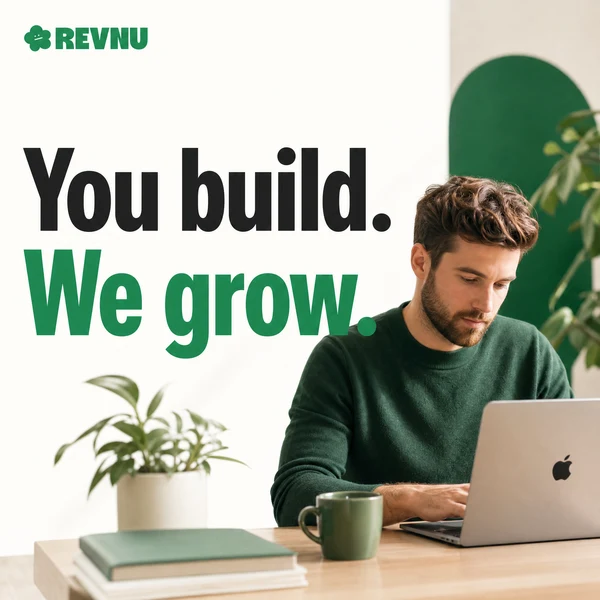
You build.
We grow.
Connect your tools. Wake up to ads scaled, posts ranking, leads queued, churn won back. Pings you a message when something actually moves.