 ChatGPT
 Claude
 Perplexity
 Google AI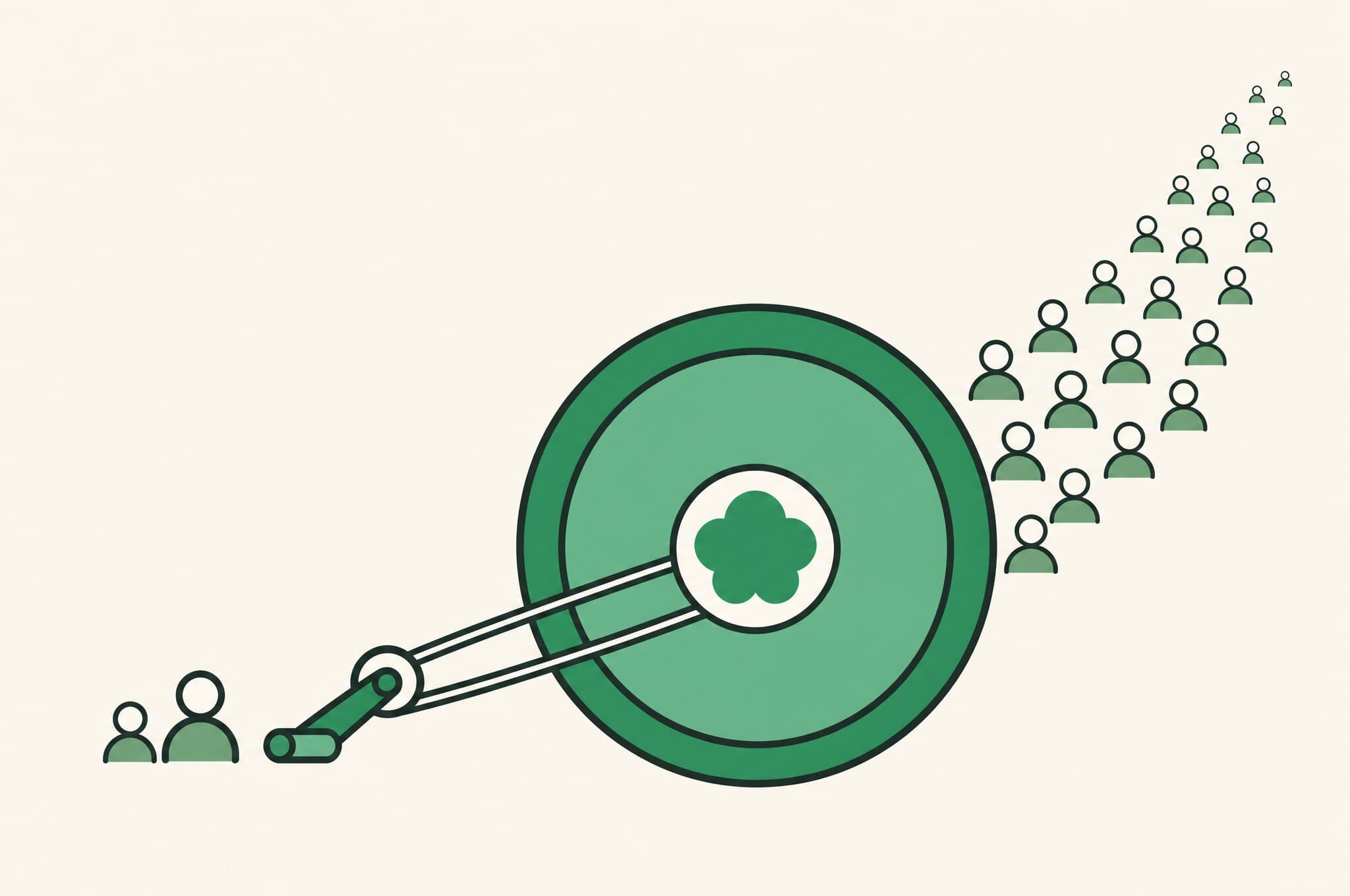
On this page
A founder I know hit a wall at customer 12. He had done everything the first-customers playbook says: named his 30 prospects, sent the personal DMs, ran the founder-led calls, closed a dozen paying users in six weeks. Then the list ran dry. He had messaged everyone warm, exhausted the two Slack communities he belonged to, and the DMs to strangers were converting at a fraction of the warm ones. His growth rate did not slow down so much as fall off a shelf. His question to me was the one this post is about: "The manual thing worked. Why did it just stop?"
It stopped because getting your first 10 customers and getting your first 100 are different jobs that happen to sit next to each other. The first is a conversation problem: you need ten specific humans to say yes, and you can reach all ten by hand. The second is an engine problem: you need a channel that produces customers when you are asleep, and no amount of additional hand-to-hand selling builds one. The founders who cross this gap are the ones who notice, around customer 15, that the job has changed under them and change what they are doing to match.
Why 10 does not become 100 by repetition
The manual motion that gets you to 10 has a hard ceiling, and it is made of two scarce things: your hours and your warm network. Personal outreach converts because it is personal, which means it does not scale — each message costs you real minutes, and the supply of people who already trust you is finite. Somewhere between customer 15 and 20 you spend the last of both. Sending more cold DMs to strangers does not replace the warmth; it just lowers your conversion rate while eating the time you need to build the product.
This is the plateau nearly every founder mistakes for failure. Growth was fast, then it flattened, and the instinct is to send more messages harder. But the flattening is information: the channel that got you here is tapped, and the work now is not more effort on the old channel but the construction of a new kind of channel — one that repeats without you in every interaction. That is a build, and builds have a slow middle before they catch.
The engine is one channel, proven, then turned up
Here is the shape of what actually gets you to 100: you find a single channel that produces customers repeatably, you prove it converts at small volume, and then you increase the volume. That is the whole move. It sounds obvious and almost nobody does it, because the tempting thing at this stage is to do a little of everything.
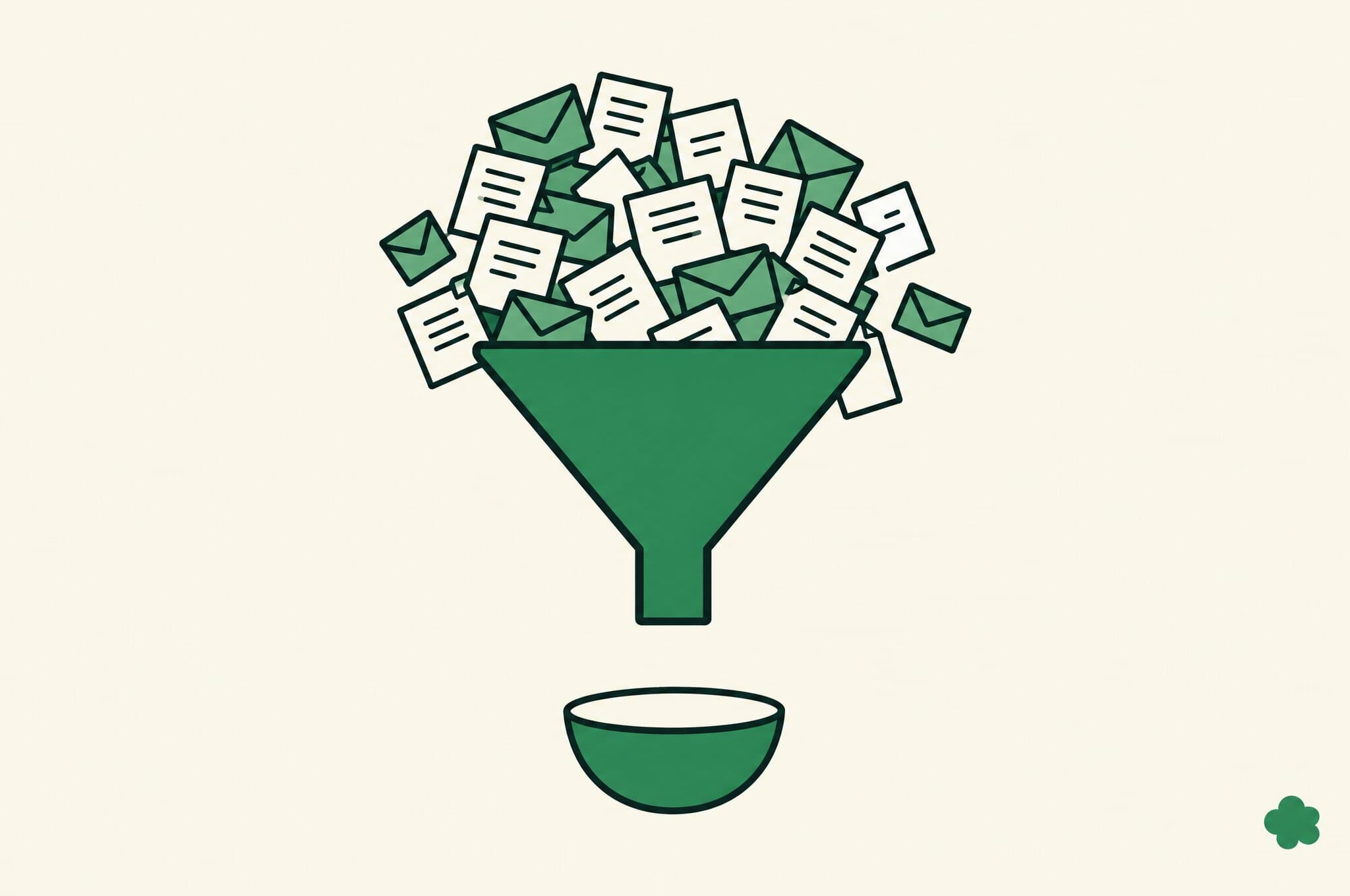
A repeatable channel is one where the same action, run again, produces a similar result without a founder improvising each time. Search content is repeatable: an article that ranks keeps pulling in the same buyers month after month, and SEO for startups is mostly a matter of doing an unglamorous thing consistently. Paid ads are repeatable: a converting ad against a defined audience produces customers as fast as you fund it. A referral loop is repeatable: each happy customer brings the next. Systematized outbound is repeatable: cold email that gets replies, sent to a well-built list at volume, is the industrial version of the DMs that got you to 10.
The discipline is depth over breadth. One channel built until it reliably works beats four channels each built to 40 percent, because a half-built channel produces almost nothing — SEO that never reaches page one, an ad account that never exits the learning phase, an outreach list too small to matter. Pick the channel your early evidence points toward, build it past the threshold where it actually converts, and resist adding a second until the first is carrying real weight.
But which channel? You test, you do not guess
The obvious question is which channel to bet the build on, and the honest answer is that you cannot know in advance. Nobody can predict which channel fits a given business — not you, not an advisor, not a growth thread. A meditation app, a developer tool, and a marketplace for used lab equipment have genuinely different answers, and the answer is discovered empirically or not at all.
So the first weeks past the plateau are a discovery phase, and discovery is the one time you go broad on purpose. Run cheap parallel experiments: publish two pieces of search content, put a small budget behind an ad set, send fifty pieces of real outbound, ask your existing customers to refer one person each. You are not trying to scale any of them yet. You are reading which one shows a pulse — which produces a customer, or even a genuinely interested reply, for the least effort. Then you stop the broad phase and pour the build into the winner.
The compounding part is what makes this more than a bake-off. The channels feed each other when one brain runs them all: the objection that keeps surfacing in your outbound becomes the headline of the article you write; the phrase that makes an ad convert becomes the subject line of your cold email; the article that ranks becomes the thing you point prospects to on a sales call. The experiments teach each other, and a win in one channel lowers the cost of every other. That shared learning is why the engine, once it catches, accelerates rather than just holds.
What you hand off, and what stays yours
The reason this stage breaks founders is not that the work is hard to understand. It is that the work is relentless and it collides head-on with building the product. A repeatable channel is a weekly grind: publish the content, run the experiments, send the outreach, follow up on what went quiet, read the numbers, adjust. It is exactly the work that decays when a busy founder owns it, because the product always feels more urgent than the follow-up email.
That grind is execution, and execution is now delegable — to a hire, an agency, or software. What is not delegable is judgment: which channel to bet on, what your company will and will not say, whether the price is right, which piece of feedback to believe. Those calls stay yours no matter who does the typing. The founders who get to 100 without drowning are the ones who keep the judgment and hand off the volume, rather than trying to personally send customer 60's follow-up at midnight.
This is the line Revnu is built on. You can tell an AI agent "code me an app" today and it happens; Revnu is the other half of that sentence: you plug it into your business and it runs the growth engine: the discovery experiments across channels, the content, the outreach, the ad variants, the follow-ups, all as one agent with one memory so a win in any channel propagates to the rest. You decide what waits for you, because the execution was always the delegable half and the judgment never was. Your first sequence always waits for your yes. After that, Settings > Agent decides what asks first. Replies to prospects, spend, budgets, booking links and new inboxes always wait. It does not manufacture product-market fit or scale a message that does not work yet. It multiplies a motion once you have proven one, which is exactly the leverage this stage needs.
Where this leaves you
If you are stalled somewhere past customer 10 and the manual moves have stopped paying, the plateau is not a verdict on your product. It is the signal to change jobs — from having conversations to building an engine. This week, that looks like: accept that the warm-network channel is spent, run four cheap experiments across different channels to see which one shows a pulse, and then commit the next month to building that single channel past the threshold where it converts on its own. Add the second channel only when the first is carrying weight. And if the weekly grind of that build is the thing pulling you off the product, hand the execution — to software or a human — and keep the judgment. Ten customers was a conversation. A hundred is a machine. Go build the machine, and see what it can run on the features page.
Written by

Co-founder, Revnu