Solo founder marketing
The One-Person Growth Stack: Marketing as a Solo Founder
On this page
Most solo founders I meet are not doing too little marketing. They are doing too much of it, badly. They have a half-built newsletter, three social accounts posted to twice, a blog with four orphaned posts, a cold email tool they bought and never set up, and a nagging sense of falling behind on all of it. The problem is not effort. It is spread. Ten things done at ten percent add up to nothing that compounds.
Solo founder marketing is a different discipline from marketing with a team, and the people who succeed at it are ruthless about scope. They run a small number of channels consistently, protect the few things only a founder can do, and hand everything repetitive to software. This post is that system: the one-person growth stack, built so you can grow your business with AI without becoming a full-time marketer or hiring one. (If you are weighing that hire seriously, what a growth marketer actually does breaks the week down first.) The whole thing fits in a few hours a week, if you let most of the work go.
The trap is doing everything at ten percent
The reason spread feels right is that every channel looks free to add. One more account, one more tool, one more tactic from a thread you read. None of them costs much alone. Together they cost the only thing you have, which is attention, and they split it so thin that nothing reaches the threshold where it starts to work.
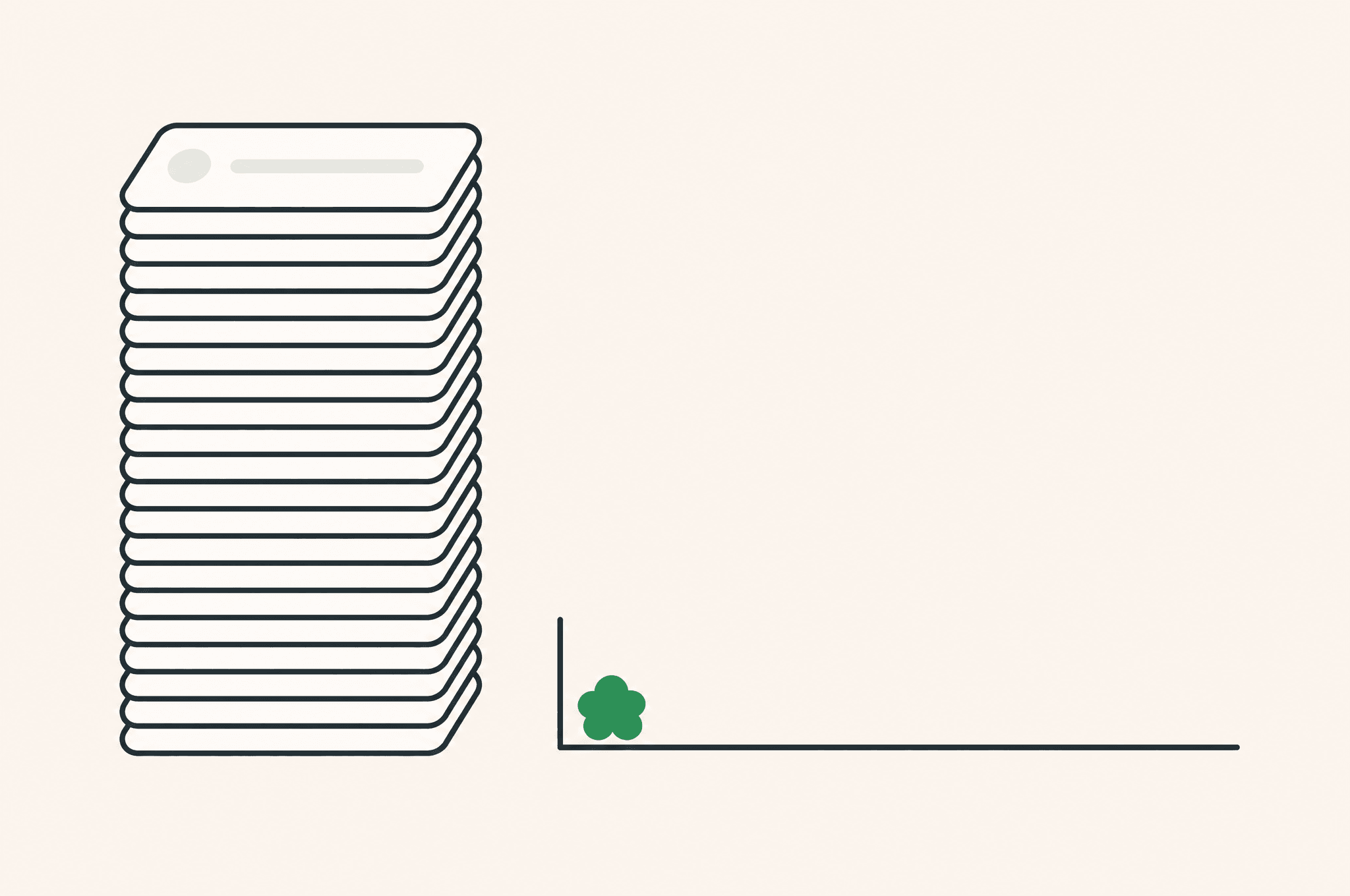
Compounding has a minimum. A blog needs a steady cadence before a domain earns enough trust to rank. Outreach needs follow-up before it produces conversations. A social presence needs months of showing up before anyone remembers you. Below the threshold, effort evaporates; above it, the same effort builds. Eight channels run occasionally all sit below the line. The fix is not more discipline applied to all of them. It is fewer channels, each pushed above the line.
Pick three channels and ignore the rest
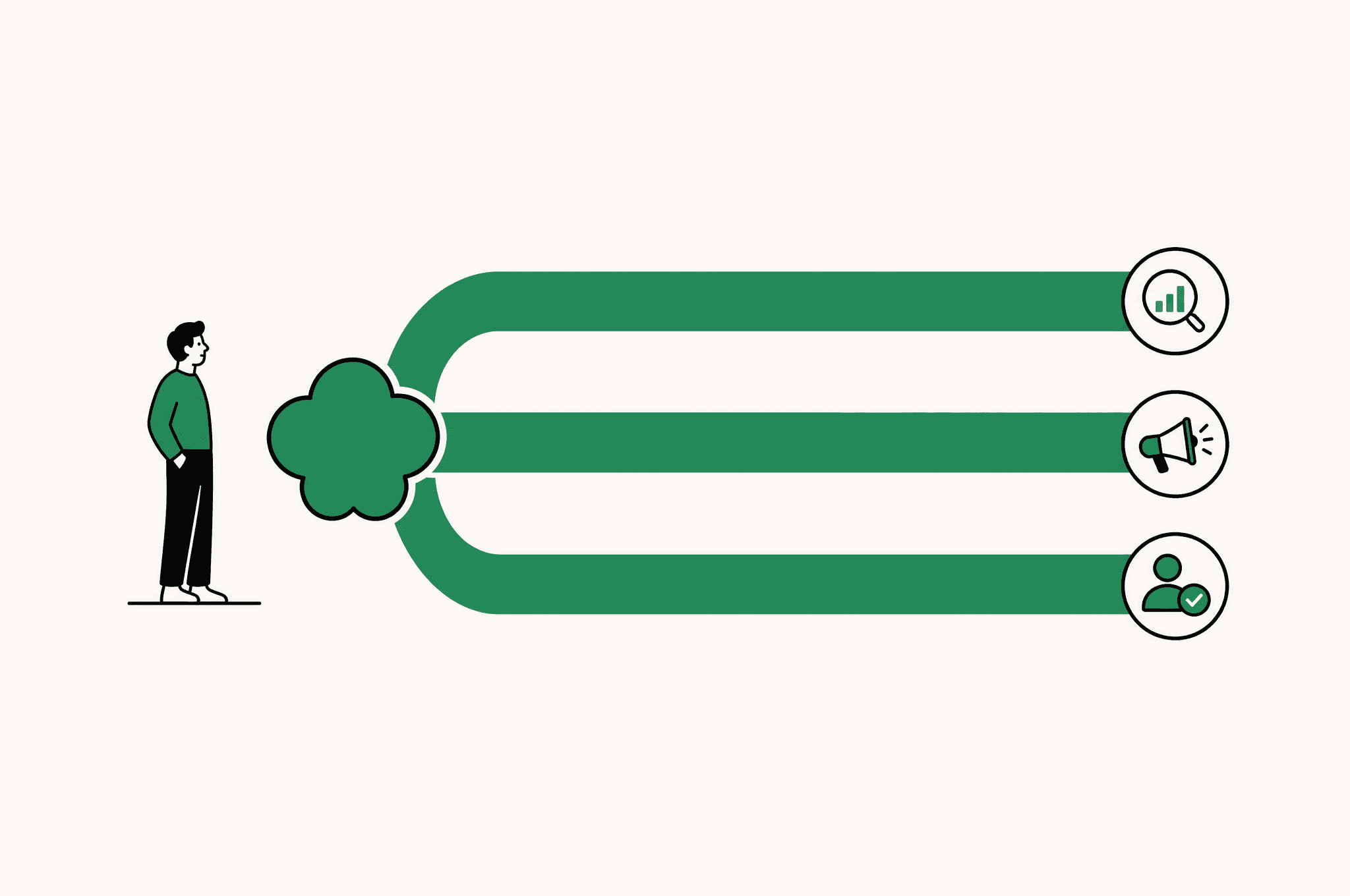
Three is the number that fits one person: a slow channel that compounds, a fast channel that produces conversations now, and a presence channel where your audience already is.
The slow channel is almost always content that ranks for what your buyers search. It pays off in months, not weeks, which is exactly why you start it first and never skip it. The fast channel is direct outreach to people who clearly have your problem, the motion behind your first customers, because it can produce a reply this week. The presence channel is one place, not five: the single social network or community where your specific buyers actually gather, posted to consistently rather than broadcast everywhere.
Pick your three and write the rest down on a "not now" list. The list matters because it converts guilt into a decision. You are not ignoring the other channels by accident; you are choosing, on purpose, to win three before adding a fourth.
The pairing is deliberate, not arbitrary. The slow channel and the fast channel cover each other's weakness: outreach pays the bills this month while content earns the traffic that arrives next year and never leaves, so you are never starving while the compounding builds. The presence channel does a third job, which is trust. When a cold-emailed prospect looks you up, a steady, useful feed is the proof that you are real and worth a reply. Three channels chosen this way reinforce each other; three random channels just divide your week.
Keep the work only you can do
A solo founder has a small set of jobs that cannot be delegated to anyone, human or machine, and protecting them is the point of automating everything else.
The first is the message: what problem you solve, for whom, in their words. This lives at the intersection of your product and your buyer, and you are the only person who understands both, a point marketing for technical founders makes in detail. The second is relationships: the founder-to-founder reply, the call with an early customer, the warm introduction. People buy from a person early on, and that person is you. The third is taste: the final judgment on whether a draft sounds right and is true. These three are the irreducible core. Everything else is execution.
Guard these jealously. When your week gets eaten, it should be eaten by these, not by the mechanical work that any system can carry.
Hand the repetitive execution to AI
Look at what is left once you subtract message, relationships, and taste, and it is almost entirely repetition: drafting this week's post, writing the outreach openers, sending the follow-ups, running a small experiment, watching what worked. This is the work that eats a founder's week and the first thing that slips when a customer escalates.
It is also exactly the shape of work AI is good at now. Not a chatbot you prompt one output at a time, but an agent that runs the cadence across your three channels and learns from the results, the distinction drawn in AI growth agents. It drafts, it sends, it follows up, it surfaces what is working, and it keeps going on the weeks you cannot. You stay the message, the relationships, and the taste; the agent becomes the hands — the same split that makes the autonomous business possible once growth is the last function still done by hand. That division is how one person runs three channels at a cadence that used to need a small team.
The rule that keeps it safe is approval. Every draft waits for your yes before it goes live, so scaling the volume never costs you the voice.
Cut the work that only feels productive
The last move is subtraction, and it is the one solo founders resist most, because the busywork is comfortable.
Redesigning the logo for the third time. Tweaking the landing page weekly instead of writing the post. Opening an account on whatever platform launched this month. Reading growth threads and saving tactics you never run. None of these has a path to a customer, and all of them feel like marketing, which is what makes them dangerous. They are procrastination wearing a marketing costume, and they are seductive precisely because the real channels are slower and harder.
Apply one test to any marketing task: can you trace a plausible line from this to a customer? If not, it goes on the "not now" list with the extra channels. A solo founder's edge is focus, and focus is mostly a long list of things you have decided not to do.
There is a subtler version of this trap worth naming, because it catches careful people. It is tuning the work you should be shipping: rewriting the same post for the fifth time, A/B testing a subject line on a list of forty, agonizing over a landing-page headline that twelve people will read this month. Polish has a point of diminishing returns that arrives much earlier than it feels like it should. At your stage, a good post published beats a perfect post still in drafts, because the only way to learn what your buyers respond to is to put work in front of them. Ship at eighty percent, watch what happens, and spend the saved hours on the next thing rather than the last one.
What this looks like with Revnu
Revnu is built for exactly this shape of problem: one person who needs three channels run and only has time for the judgment. You connect your product, your site, and Slack or iMessage, and it runs the cadence across content, outreach, and experiments, drafting posts that target what your buyers search, writing outbound in your voice, and following up on what went quiet. You keep the message, the relationships, and the final say; every draft waits for your approval before it ships. It is the difference between ten tools you babysit and one stack that runs, and it learns across all three channels so the work gets sharper instead of just busier. The features page shows the full set of lanes, and the pricing is built to compare against the marketer you would otherwise hire.
Where this leaves you
Solo founder marketing is won by subtraction, not addition. Pick three channels and push each above the line where it starts to compound. Guard the three things only you can do, the message, the relationships, and the taste, and hand every repetitive piece of execution to an agent that keeps the cadence on the weeks you cannot. Cut the comfortable busywork that never reaches a customer. Done this way, you can genuinely grow your business with AI as one person, not by working more hours but by spending the few you have on the work that only you can do.
Let Revnu run this for you.
Connect your product and Revnu drafts the SEO, ads, and outbound. You approve in one tap. Book a 30-minute call and see it on your stack.
Book a demoFrequently asked questions
How does a solo founder do marketing with no time?
Pick three channels and run a small, fixed weekly cadence on each, then automate the repetitive execution. Solo founder marketing fails when you try every channel and do all of them badly. Choose the two or three where your buyers actually are, decide what only you can do, and hand the drafting, sending, and following up to AI so the cadence survives a busy week.
What marketing channels should a solo founder focus on?
Usually three: content that ranks for what your buyers search, direct outreach to people with the problem, and one social or community channel where your audience already gathers. That covers a slow compounding channel, a fast conversation channel, and a presence channel. Ignore the rest until these work. Three channels run consistently beat eight run occasionally, every time.
Can AI run marketing for a solo founder?
AI can run the execution, not the judgment. It drafts posts, writes outreach, runs experiments, and keeps the cadence, which is the work that eats a founder's week. What it cannot do is decide your message, own your relationships, or judge what is on-brand. Keep those, automate the rest, and approve every draft before it goes out so the work scales without losing your voice.
What should a solo founder stop doing in marketing?
Stop doing the work that feels productive but moves nothing: redesigning the logo, chasing every new platform, tweaking the website weekly, and reading growth threads instead of shipping. These are comfortable because they avoid the harder, slower channels that actually compound. If a task has no path to a customer, it is procrastination wearing a marketing costume. Cut it.
Written by
Art Freebrey
Co-founder, Revnu